Build a Home Library on a Budget !

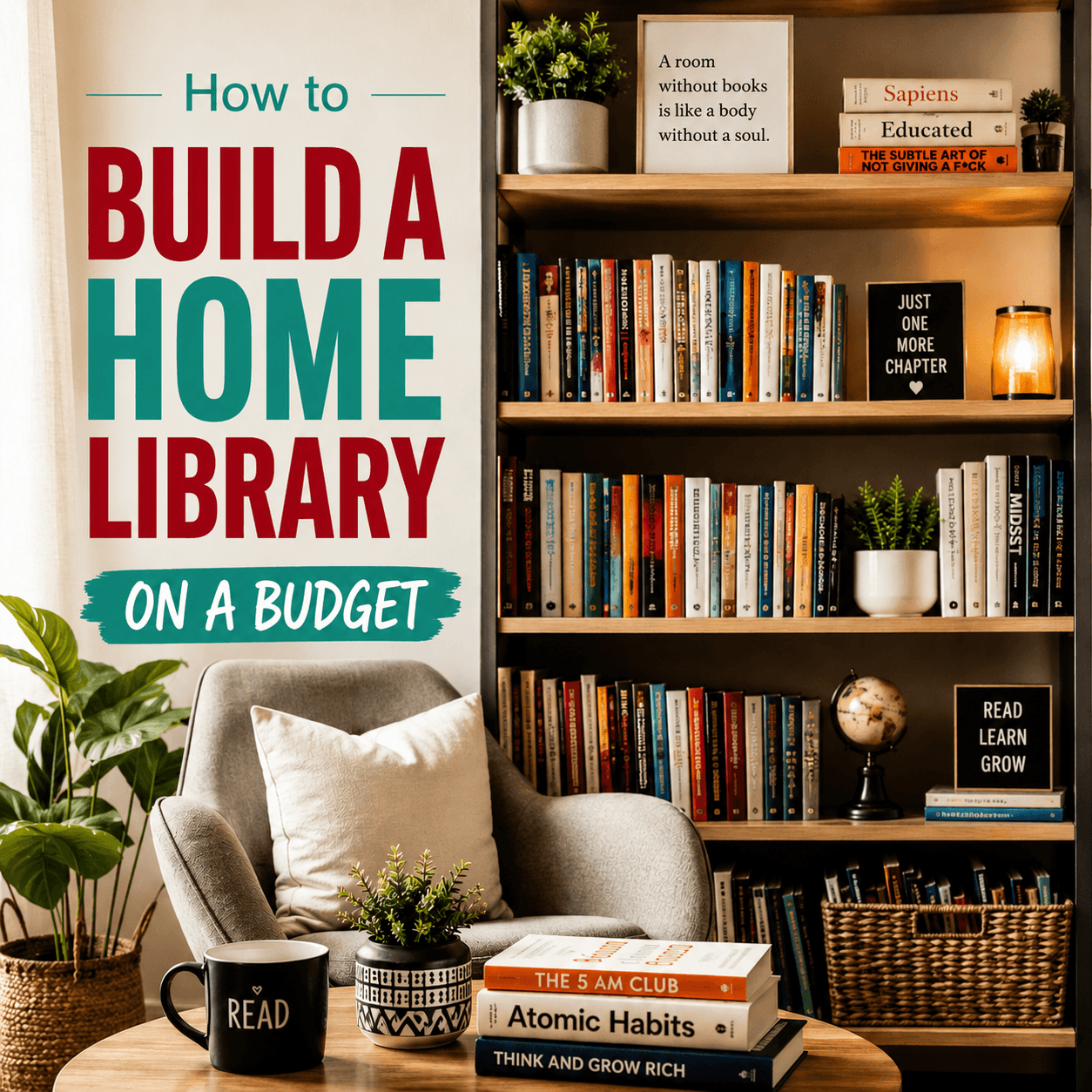
There’s something special about having a personal collection of books within arm’s reach.
It doesn’t matter if you’re an avid reader, a student, a parent, or simply someone who enjoys learning, a home library is an investment in knowledge and personal growth.
And guess what ? you don’t need a huge budget or a dedicated room to create one. With a little planning, you can build a library you and your family will love without spending a fortune !
Now let’s dive into how to get started
1. Start with Your Interests
Before buying books, think about what you enjoy reading. Your home library should reflect your interests and goals.
You might include:
- Fiction and novels
- Business and entrepreneurship
- Self-development
- Children’s books
- History and biographies
- Health and wellness
- Faith and inspirational books
Buying books you will actually read helps you avoid wasting money on titles that gather dust.
2. Set a Monthly Book Budget
Building a library won’t happen overnight. Decide how much you can comfortably spend each month and stick to it.
Even buying one or two books every month adds up over time. Consistency is more important than quantity.
3. Buy Used Books
Pre-owned books are often in excellent condition and cost significantly less than brand-new copies.
Check trusted online marketplaces, local bookshops, charity sales, and community book fairs for affordable bargains.
4. Look Out for Sales and Discounts
Bookstores and online sellers regularly run promotions during holidays, special events, and clearance sales.
Creating a wishlist can help you grab your favourite titles when prices drop.
5. Mix New and Second-Hand Books
Not every book has to be brand new. Buy new editions when they’re important to you, and choose used copies for everything else.
This simple strategy stretches your budget while helping your library grow faster.
6. Organise Your Books
A home library doesn’t require expensive furniture.
Use:
- Floating shelves
- A simple bookshelf
- Storage boxes
- Wooden crates
- A corner shelf
Keep books organised by genre, author, or colour, whatever makes them easy for you to find and enjoyable to display.
7. Exchange Books with Friends
Book swaps are an excellent way to discover new titles without spending extra money.
Sharing books also creates opportunities to discuss ideas and recommendations with fellow readers.
8. Buy Books You Will Read Again
Some books are worth revisiting. Focus on titles that continue to provide value over time instead of buying every trending release.
Quality always beats quantity.
9. Leave Room for Growth
Your library doesn’t need to be perfect from day one.
Building a meaningful collection takes time. Every new book adds another piece to your personal journey of learning and discovery.
A home library is about creating a collection that inspires, educates, and brings you joy.
Start small, shop wisely, and grow your library one book at a time. Before long, you’ll have a space filled with stories, ideas, and knowledge that you’ll return to again and again.
If you’re looking for affordable books to begin or expand your collection, Bookly Stores makes it easy to discover a wide range of titles from trusted sellers. Your next great read could be just a click away.
www.booklystores.com